



New Delhi, Jul 17: Prime Minister Narendra Modi has flagged off India’s first hydrogen-powered train. The train will run on the 89-km Jind-Sonipat route in Haryana under Northern Railway.
For the first time, hydrogen fuel cell technology will be used in India. The technology will use hydrogen fuel cells to produce electricity, making it a cleaner alternative to diesel trains. The project also includes hydrogen storage and refuelling facilities.
“India has become one of the select group of nations that have such trains. This will go a long way in ensuring that India adopts clean technology in the railway sector,” PM Modi posted on X ahead of the launch.
Developed as a pilot project, the train will help test hydrogen technology and support future plans for eco-friendly rail travel in India.
Key Features of Hydrogen Train:
- 10-car hydrogen fuel cell-based trainset.
- Powered by a 1200 kW hydrogen fuel cell propulsion system.
- Approved to operate at a maximum speed of 75 kmph with a design speed of 110 kmph.
- Capacity of Around 2,600 Passengers.
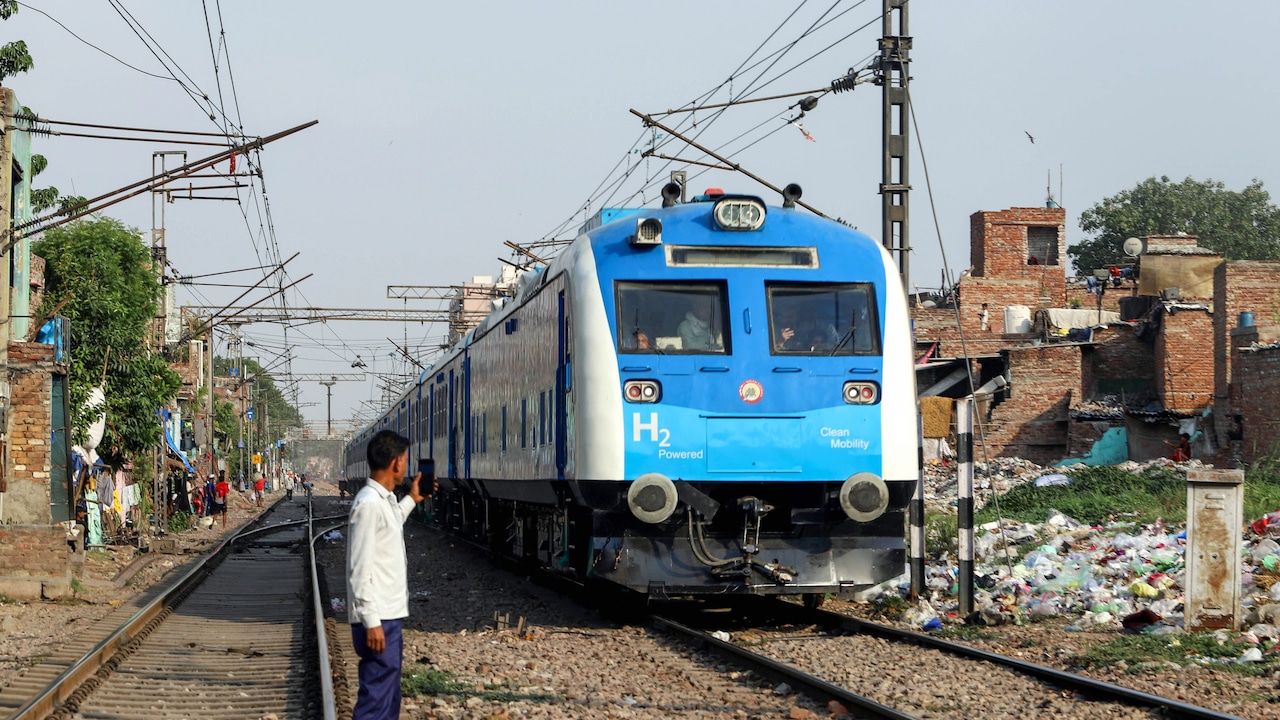
- Developed from the design stage through prototype manufacturing.
- It will connect Jind Junction, Gohana Junction and Sonipat while serving intermediate stations.
- Proposed halts: Jind City, Pandu Pindara Junction, Lalit Khera Halt, Bhambhewa, Isapur Kheri Halt, Butane Halt, Khandrai Halt, Rabrah Halt, Lath Halt, Mohana, Barwasni Halt and Sonipat New.
Which Other Countries Have Hydrogen-Powered Rail Transportation?
With this move, India joins a select group of countries exploring hydrogen-powered rail transportation. These include Germany, Japan, China and the United States.
Germany was the pioneer in deploying the world’s first hydrogen-powered passenger train, the Alstom Coradia iLint. In 2022, the train completed a record 1,175 km journey without refuelling. Meant to operate on the Bremervörde route in Lower Saxony, these trains were launched with cleaner zero-emission technology as an alternative to the diesel-powered trains.
Additionally, Germany is also expected to deploy three hydrogen-powered trains in the Südostbayernbahn network this year. These trains will operate on the 32.2-km Mühldorf–Tüßling–Burghausen route, using roof-mounted fuel cells and lithium-ion batteries for zero-emission travel, as per the Hydrogen Europe website.
According to Kyodo News, a local Japanese news network, the first-ever hydrogen hybrid train will begin operations on select Japanese railway lines by the end of fiscal 2027. The train will run on the Tsurumi and Nambu lines in Kanagawa Prefecture near Tokyo and will be known as the “Hybari” train.
In 2024, California introduced the US’ first hydrogen-powered passenger train, known as Zemu, in San Bernardino. The zero-emission train uses a hybrid hydrogen fuel cell and battery system for operation and was designed to improve air quality in the region. According to The Guardian, Zemu produces only water vapour as a byproduct and runs on a 9-mile line known as the Arrow Corridor. The project cost $20 million.

